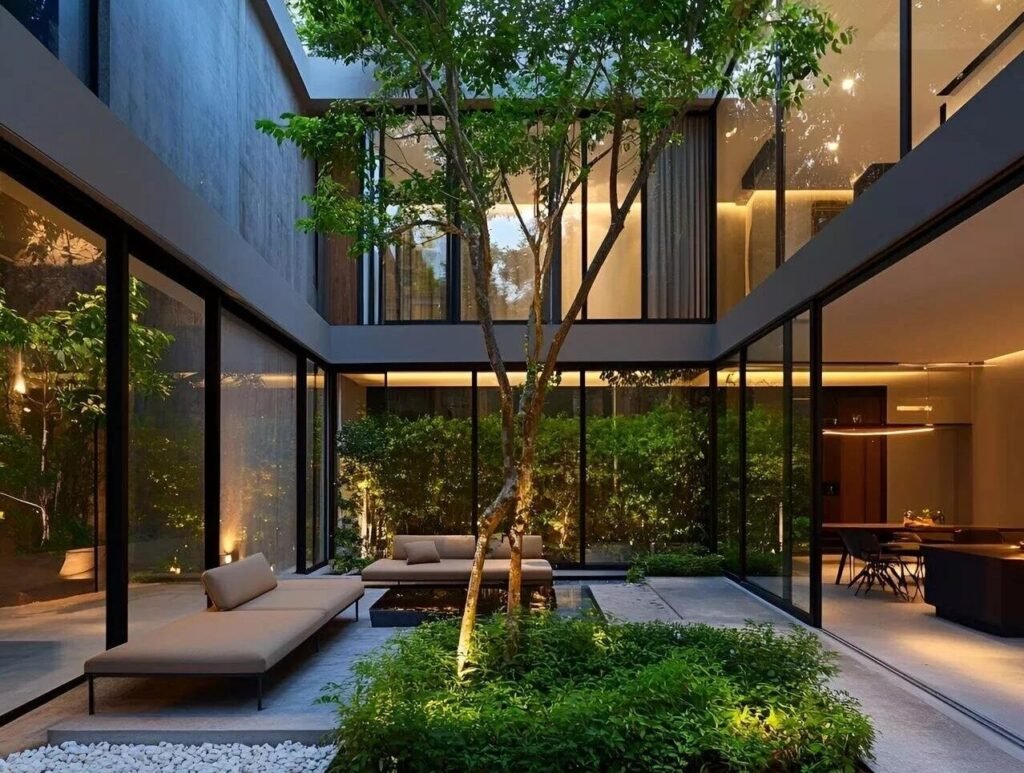
Yes, Vastu and modern design can coexist in a luxury home. Vastu Shastra governs orientation, room placement, and energy flow — not aesthetics — so a home can follow Vastu-compliant principles for its entrance, kitchen, and master bedroom while still using contemporary architecture, glass facades, open-plan layouts, and minimalist interiors. The key is planning for both from the first floor plan, not retrofitting one onto the other later.
For generations, Vastu Shastra has shaped how Indian homes are built — where the kitchen sits, which way the main door faces, how light moves through a room. Today’s luxury homeowners across Noida, Delhi NCR, and Gurgaon often carry this inheritance into very different territory: floor-to-ceiling glass facades, open-plan living, minimalist material palettes, and architecture inspired by global design movements.
At Meraki Architectural Consultants, we’ve spent over a decade designing homes and villas across North India, and the question we hear most often isn’t “Vastu or modern design?” It’s “can I have both?”
The answer is yes. In our experience across dozens of residential projects, the two aren’t in conflict at all. Vastu, at its core, is about orientation, energy flow, and balance. Modern design, at its core, is about function, light, and simplicity. They’re solving many of the same things, just using different languages.
What Does Vastu Actually Ask For?
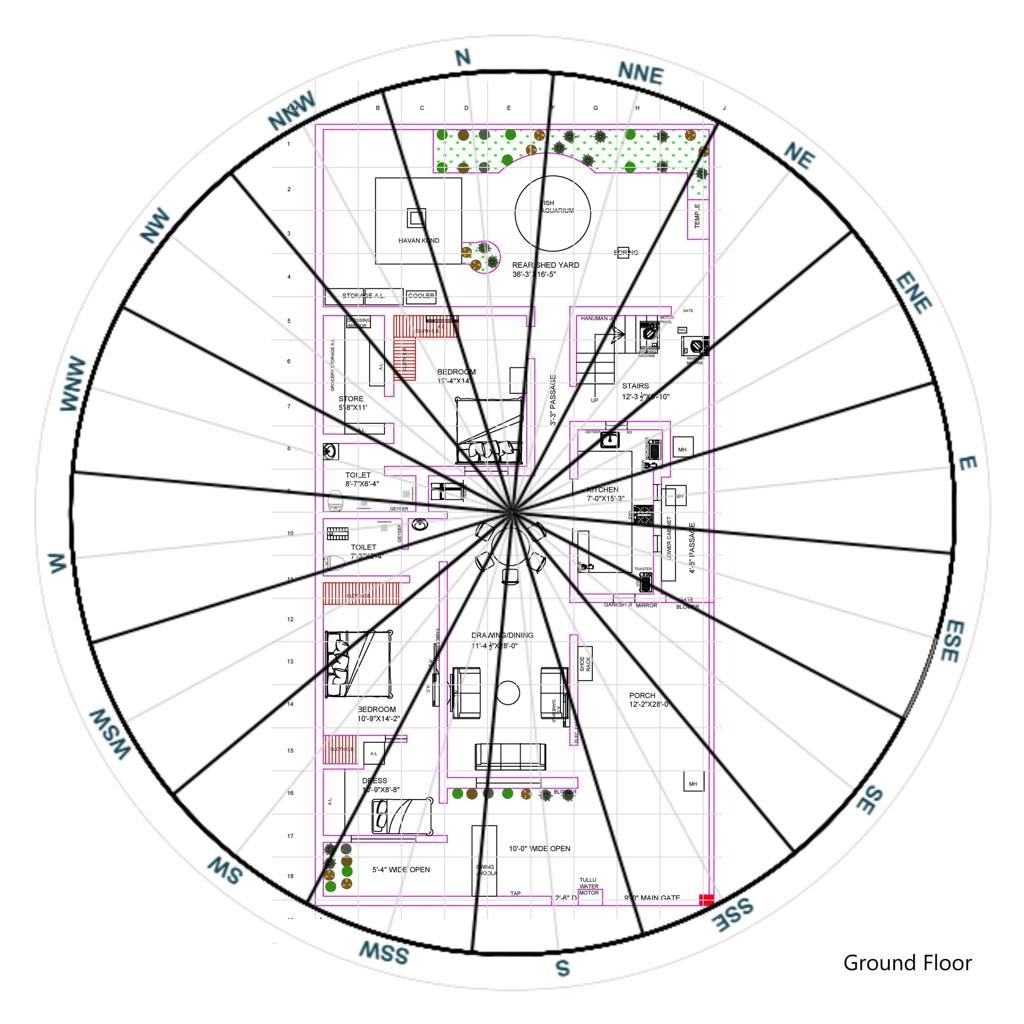
Strip away the mysticism and Vastu Shastra is, in many ways, an ancient system of environmental design. It has clear positions on:
- Direction of the main entrance — typically favoring north or east for the flow of positive energy and morning light
- Placement of the kitchen — usually southeast, aligned with the fire element
- Location of the master bedroom — often southwest, for stability and grounding
- Position of water bodies — northeast is preferred, tied to the water element
- Open, uncluttered central spaces — the Brahmasthan, or heart of the home, is meant to stay light and unobstructed
None of this is inherently at odds with contemporary architecture. In fact, several of these principles — cross-ventilation, morning light in living spaces, an uncluttered core — are exactly what modern passive design also aims for.
Where Luxury Modern Design Meets Vastu Halfway
As luxury architects working across Noida, Delhi, and Gurgaon, the friction we see usually shows up in the details, not the philosophy. A homeowner might want:
An open kitchen island facing a living room — Vastu-compliant orientation is still achievable; we simply adjust where the island sits within the southeast zone rather than abandoning the open-plan concept altogether.
Large window walls on every façade — Vastu doesn’t reject light, it prescribes which light matters most. We prioritize larger openings toward the north and east while treating west-facing glass with deeper overhangs or louvres — solving for both energy flow and the harsh afternoon sun common across Delhi NCR and Noida in one move.
A statement staircase in the center of the home — Traditionally discouraged, since it blocks the Brahmasthan. Our workaround is architectural, not spiritual: shift the staircase to a corner and let the center breathe as an atrium or double-height space instead. The result often looks more expensive, not less.
A home office or study — Vastu favors northwest or west for focus-oriented spaces, which aligns naturally with the quieter, away-from-entrance zoning that most home-office design already recommends anyway.
Frequently Asked Questions
Does following Vastu limit modern architectural design?
No. Vastu governs orientation and room placement, not style. A home can be fully Vastu-compliant and still use contemporary materials, open floor plans, and minimalist interiors.
Can an existing modern home be adjusted for Vastu without major renovation?
In many cases, yes — through furniture placement, color zoning, and minor layout tweaks. Structural elements like entrance direction or load-bearing walls are harder to change after construction, which is why early planning matters.
Is Vastu relevant for commercial or office spaces, not just homes?
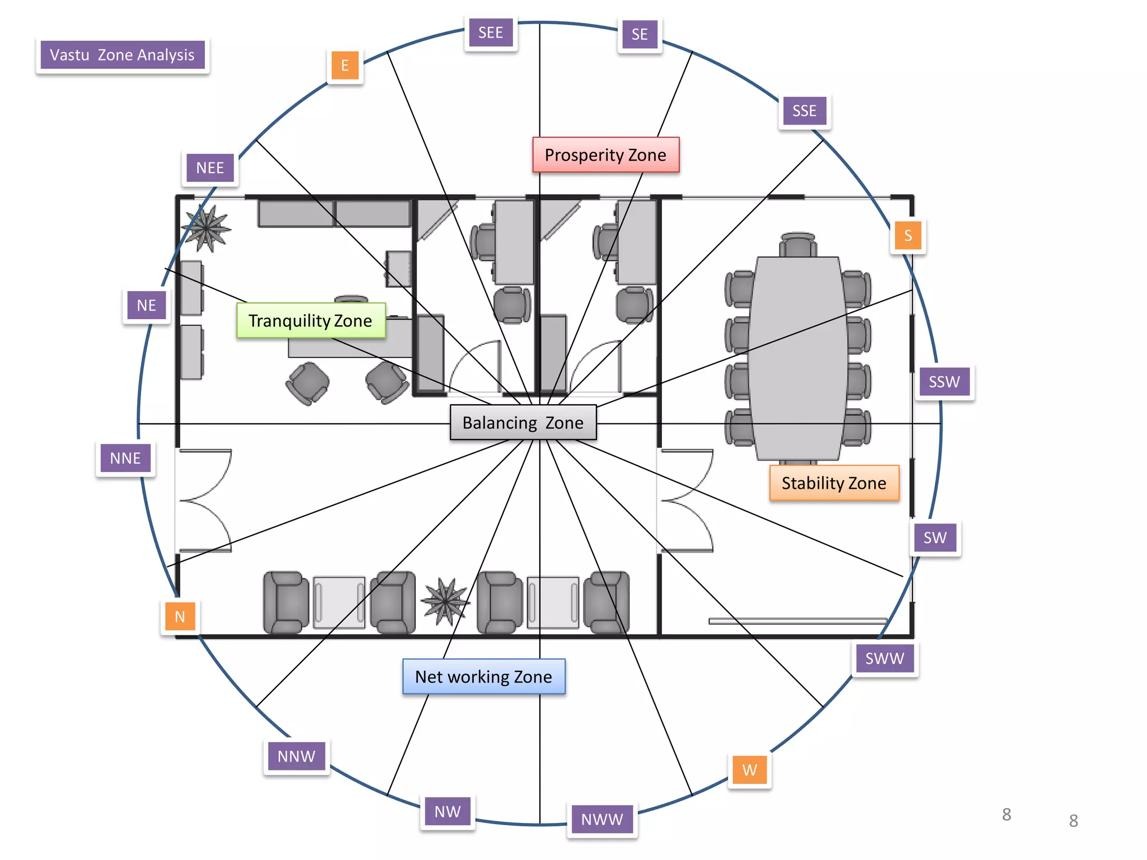
Yes. Many of our luxury architecture clients in Delhi, Gurgaon and Noida apply Vastu principles to office layouts as well, particularly entrance direction and the placement of workstations relative to natural light.
Do all clients at Meraki Architectural Consultants request Vastu compliance?
No. Some clients want a Vastu-first home; others prefer a fully modern design and skip it altogether. We raise the question early in every project so the family can decide what matters to them.
The Real Skill Is in the Translation
This is where an experienced architectural team earns its fee. Applying Vastu correctly in a genuinely luxury build isn’t about rigidly following a checklist — it’s about knowing which principles are structural (direction of load-bearing walls, orientation of the plot, placement of the main door) and which are flexible (furniture placement, interior zoning, decorative elements).
Over the years, our team at Meraki Architectural Consultants has designed villas across Noida, Delhi, Gurgaon, and Bijnor where clients wanted a resolutely contemporary aesthetic — clean lines, exposed concrete, minimal ornamentation — while still respecting core Vastu positions for the kitchen, master bedroom, and entrance. The two lived together comfortably because we planned for both from the very first floor plan, rather than trying to retrofit Vastu onto a finished modern layout, or vice versa.
A Few Principles We Design By
- Solve for orientation first, decoration second. Vastu is largely about the bones of a building — plot orientation, room placement, entrance direction. Get this right at the architectural stage and the interior can be as contemporary as you like.
- Use light and material to do double duty. A north-facing living room with a stone-clad accent wall satisfies Vastu’s preference for that zone while also giving you a striking, tactile design feature.
- Treat the center of the home as sacred, structurally speaking. Whether or not a client is deeply invested in Vastu, keeping the central zone open, light-filled, and uncluttered tends to make a home feel more spacious and considered — good design, regardless of belief system.
- Bring in Vastu consultation early, not as an afterthought. The earlier this conversation happens, the less it costs — creatively and financially — to accommodate.
Why This Matters, From Experience
Across our luxury residential and turnkey villa projects in Delhi NCR, we’ve found that clients who raise Vastu early in the design process are consistently happier with the final outcome than those who try to layer it on after construction begins. It isn’t a matter of belief — it’s a matter of sequencing. Orientation decisions made on paper cost nothing; the same decisions made mid-construction can mean rebuilt walls and delayed timelines.
This is the kind of hands-on lesson that comes only from having actually delivered these projects — which is why we always recommend an in-person or on-site consultation before finalizing a floor plan.
Does Every Client Need This?
No. Across our projects in Noida, Delhi, Gurgaon, and Bijnor, some clients want a Vastu-first home; others want us to learn fully modern and skip it altogether. Our role isn’t to insist on either — it’s to ask the question early, understand what matters to the family living in the space, and design a home that reflects both their aesthetic and their values.
Luxury, in the end, isn’t about choosing between tradition and modernity. It’s about having the design expertise to make both feel effortless.
Meraki Architectural Consultants is a luxury architecture and interior design firm based in Noida, serving clients across Delhi NCR, Gurgaon, and Bijnor. Our team has designed and delivered residential and turnkey projects that blend traditional Vastu principles with contemporary architectural design. If you’re beginning a home project and want to explore how Vastu and modern design can work together for your space, get in touch with our team.